
How AI Agents Are Changing Work: From Simple Tools to Smart Orchestration
Imagine this scenario: A critical exception fires in your company’s observability tool. Someone needs to check the logs, categorize the severity, and create a defect in the systems’ project management and ticketing software. It’s five minutes of work across three systems but if you multiply that by dozens of exceptions daily, your team is spending hours on coordination instead of fixing problems.
At HealthEdge®, we built our AI orchestration platform to solve exactly this kind of multi-system coordination challenge. Instead of manually jumping between systems, you describe what you need in plain language, such as “check the observability dashboard for new exceptions and create tickets for critical issues,” and the platform figures out the rest. It selects the right specialized agents, composes a workflow, and executes it. All in seconds.
Understanding AI Agents
To truly understand how our AI orchestration platform addresses these challenges, it’s important to understand how it differs from the traditional chatbots that most health plans are currently using.
Think of an AI agent as a capable assistant who can perform tasks rather than a chatbot that just answers questions.
In the scenario mentioned above, a traditional chatbot might tell you: “To create a support ticket, go to the Tickets page, click ‘New Ticket’, fill out the form with the customer’s information, and click Submit.”
The ticket is created for you by an AI agent. AI agents can connect to your systems, such as customer databases, ticketing platforms, and project management tools, and take action, whereas traditional chatbots can only respond via text. An agent responds to your request to “create a support ticket for the login issue reported by Health Plan” by selecting the appropriate tool, calling the appropriate API, and confirming completion.
The Challenge: When Simple Tasks Become Complex Orchestration
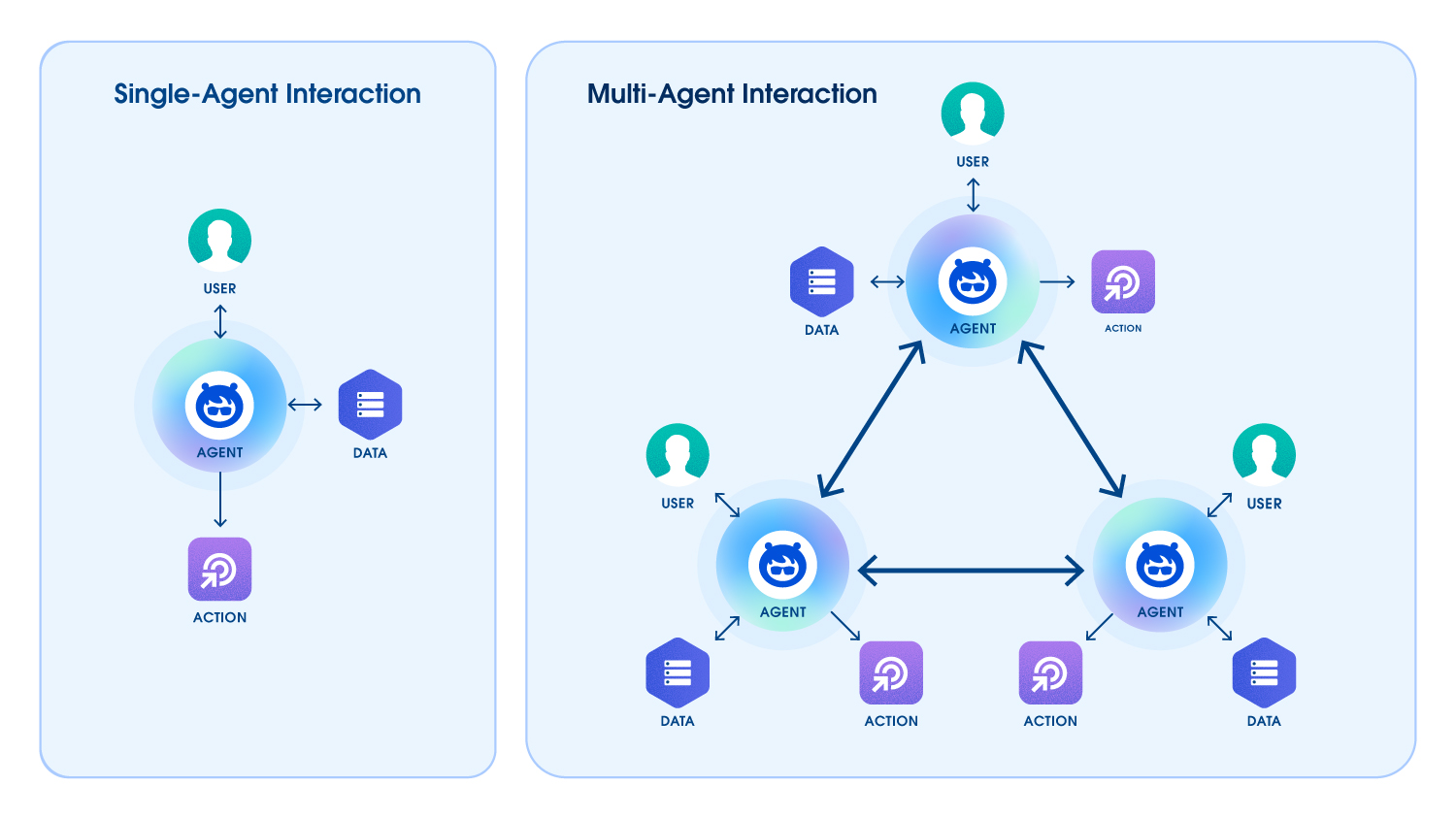
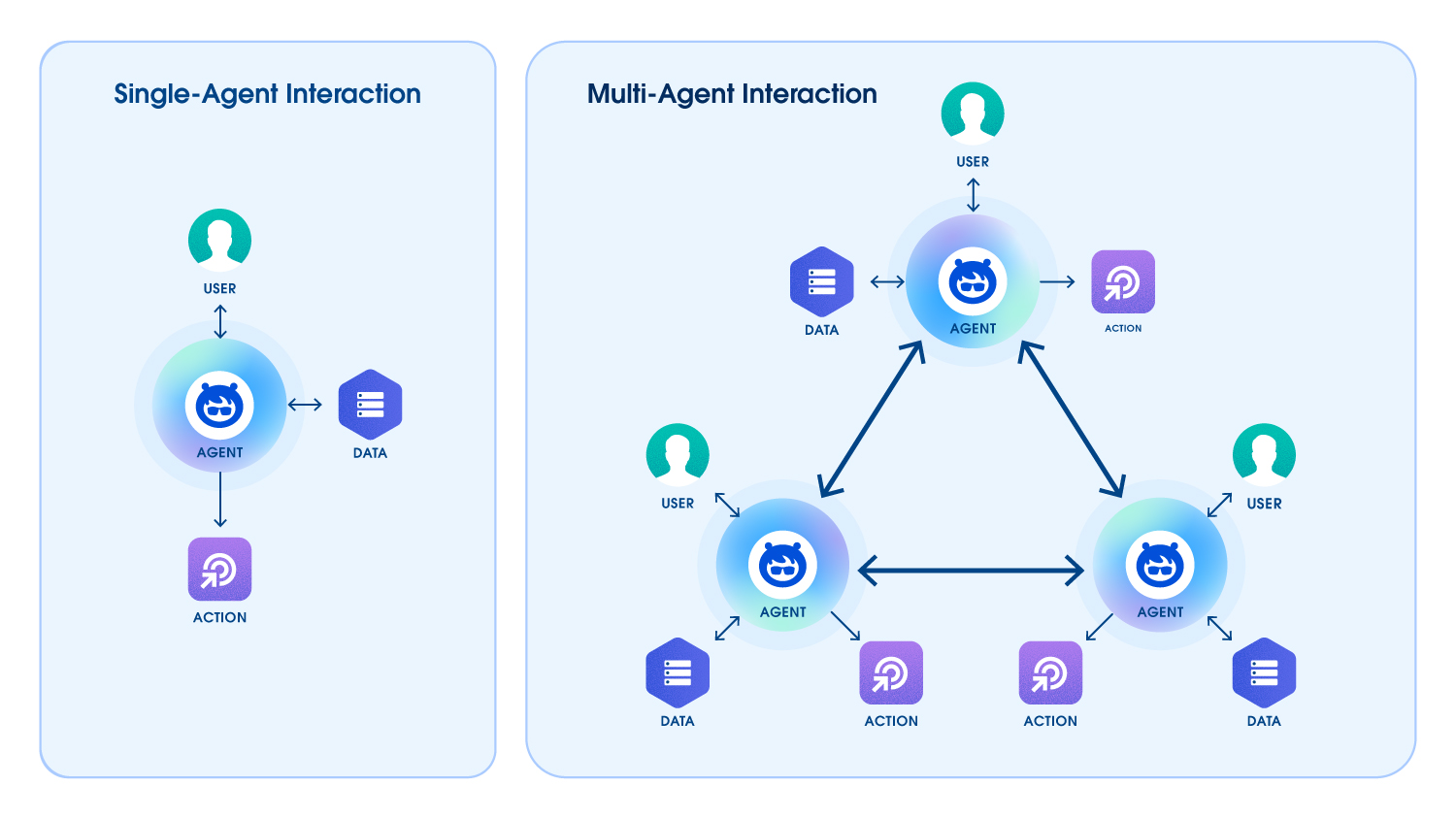
A single agent with a few tools is powerful. But business processes rarely involve just one system or one step.
In the scenario we presented above, this simple request requires querying the observability platform, parsing exception data, transforming raw data into ticket format, determining severity levels, creating defects, and tracking processed exceptions.
A single agent handling monitoring, data transformation, and ticket creation would be juggling too many responsibilities. Complex problems need coordination, also known as orchestration, not just capability.
How Our Platform Solves It: The Orchestrator
This is where the unique HealthEdge architecture comes in. Instead of one overworked agent, we have a team of specialists:
- An Exception Checker Agent expert in querying the observability platform for errors
- An Exception Mapper Agent that transforms raw exception data into structured ticket format
- A Defect Handler Agent skilled at creating properly formatted tickets
And an orchestrator that coordinates everything.
When you say, “check for new exceptions and create tickets for critical issues,” our orchestrator analyzes your request, selects the right specialists, creates a workflow, coordinates execution between agents, and returns results. An illustration of how intelligent orchestration works can be found here. The orchestrator isn’t just running a predetermined script—it’s thinking about your specific situation and composing the right solution on the fly.
Dynamic Workflows That Adapt to Your Needs
The HealthEdge approach is one of a kind because the workflows are created dynamically rather than hardcoded. In traditional automation, every scenario needs explicit programming. With our platform, you simply describe what you need: “We’re seeing errors on the observability dashboard. Create tickets for anything that looks critical.”
The orchestrator recognizes that exception monitoring and ticket creation are required, selects the three-agent workflow (Checker, Mapper, and Handler), and then constructs a sequential workflow that transmits data among agents and returns structured results. Each agent receives the data format it requires thanks to sequential execution. Before transforming data for the Handler, the Exception Mapper waits for the complete Checker results. There was no pre-programmed workflow. It was composed based on your specific request.
Built for Teams, Not AI Experts
We’ve focused on making intelligent orchestration accessible to teams without requiring AI expertise.
For technical teams adding new capabilities, the process is straightforward: define a new agent with its API endpoint, schema, and description, and it’s immediately available for the orchestrator to discover and use. No intricate integration.
No rewiring of the workflow. For business users, it’s even simpler: describe what you need in plain language, review the proposed workflow, approve and watch it execute with real-time updates, then get your results.
The Path Forward
This technology isn’t about replacing people—it’s about amplifying what people can accomplish. The decision regarding which exceptions require immediate attention is still made by DevOps engineers. Developers still write the code fixes.
Routine actions that in the past required manual orchestration are now handled by our platform. When multi-system coordination problems can be resolved in seconds rather than hours, teams are no longer limited by the mechanics but rather by their strategic thinking.